
Understanding Chinese to English NAATI Translation Requirements
A single Chinese birth certificate can create three separate problems in an Australian application. The surname may appear first on the document but last on the passport. A red seal in the corner may carry the issuing authority's name, yet it sits untranslated. The pinyin spelling on an older record may not match the spelling used in a newer one.
None of these issues means the document is wrong. They mean the translation must account for how Chinese records are written, sealed and registered. Australian organisations read the English version, so every detail that matters in the original must appear in the translation.
This guide explains the NAATI translation requirements that apply to Chinese documents, why certain features need special care and what to check before you submit anything. A NAATI certified translator handles these details as part of standard practice, but knowing what they look for helps you supply the right material from the start.
Quick answer: which requirements apply to Chinese documents?
Chinese documents follow the same core rule as every other foreign language record in Australia. The receiving organisation wants a complete English translation prepared by a translator whose credentials it can verify. For most government, legal and education purposes, that means a translator with current NAATI certification.
The translation must cover everything visible on the document. That includes the main text, seals, stamps, handwritten notes, registration numbers and any text on the reverse side. The translator adds their name, practitioner number, language direction and the date of translation. The original document stays with the translation when you submit it.
Simplified and traditional characters are not interchangeable
Mainland China uses simplified characters. Hong Kong, Macau and Taiwan use traditional characters. A translator reads both, but the document's region affects far more than the script.
Date formats differ. Taiwan issues documents using the Minguo calendar, where the year counts from 1912. A Taiwan document dated year 113 means 2024. Hong Kong certificates follow British colonial formatting conventions on older records. Mainland documents often include a national identity number that Hong Kong and Taiwan records do not carry.
These regional differences shape what the translator must explain in the English version. A date conversion, a romanisation note or a formatting difference may need a translator's note so the reader understands what the original shows.
Chinese document types by issuing region
| Document type | Issuing region | Typical features | Common translation issue |
|---|---|---|---|
| Notarial birth certificate | Mainland China | Notary office seal, certificate number, bilingual cover page | Seal text or notary details left untranslated |
| Household register (hukou) | Mainland China | Multiple family members, registration updates, official stamps | Only the applicant's page supplied, updates page missing |
| Birth or marriage certificate | Hong Kong | English and Chinese text on the same record | Assumption that no translation is needed when entries differ |
| Household registration transcript | Taiwan | Minguo calendar dates, traditional characters | Date misread by 1911 years without conversion |
| Identity card or travel document | Macau | Portuguese and Chinese text | Portuguese sections overlooked during translation |
Names, pinyin and the order problem
Chinese names place the family name first. A person called Wei Li on a Chinese document may appear as Li Wei on an Australian passport. Both are correct. The translation must show the name exactly as the document writes it, and the application must connect that name to the passport spelling.
Romanisation adds another layer. Pinyin is the standard system for mainland records. Older documents, and many from Taiwan and Hong Kong, use Wade-Giles or other systems. The same character can produce Zhang, Chang or Cheung depending on the system and region. None of these spellings is a mistake, but an inconsistent spelling across documents can trigger questions.
The practical step is simple. Tell the translator which spelling appears on your passport and ask them to keep the translation consistent with it, with a note where the original uses a different form.
Seals, chops and stamps must be translated too
Red seals carry legal weight on Chinese documents. A round seal usually identifies an organisation. A square or oval chop may identify an individual officer. These seals are text, and the NAATI translation requirements treat them the same as any printed line on the page.
A compliant translation describes each seal and translates its content. "Round red seal of the Notary Public Office of Chaoyang District, Beijing" tells the reader exactly what appears on the original. A translation that skips the seals leaves the English version incomplete, and an incomplete translation can stall an application.
Faded or overlapping seals still need attention. The translator marks anything illegible rather than guessing, which protects you from an inaccurate record.
Notarial certificates and the hukou
Many mainland applicants hold notarial certificates rather than original civil records. A notary office issues these booklets to confirm a fact such as a birth, marriage or qualification. They already look formal, and some include partial English text. They still need a full translation, because the English cover page rarely reproduces everything inside.
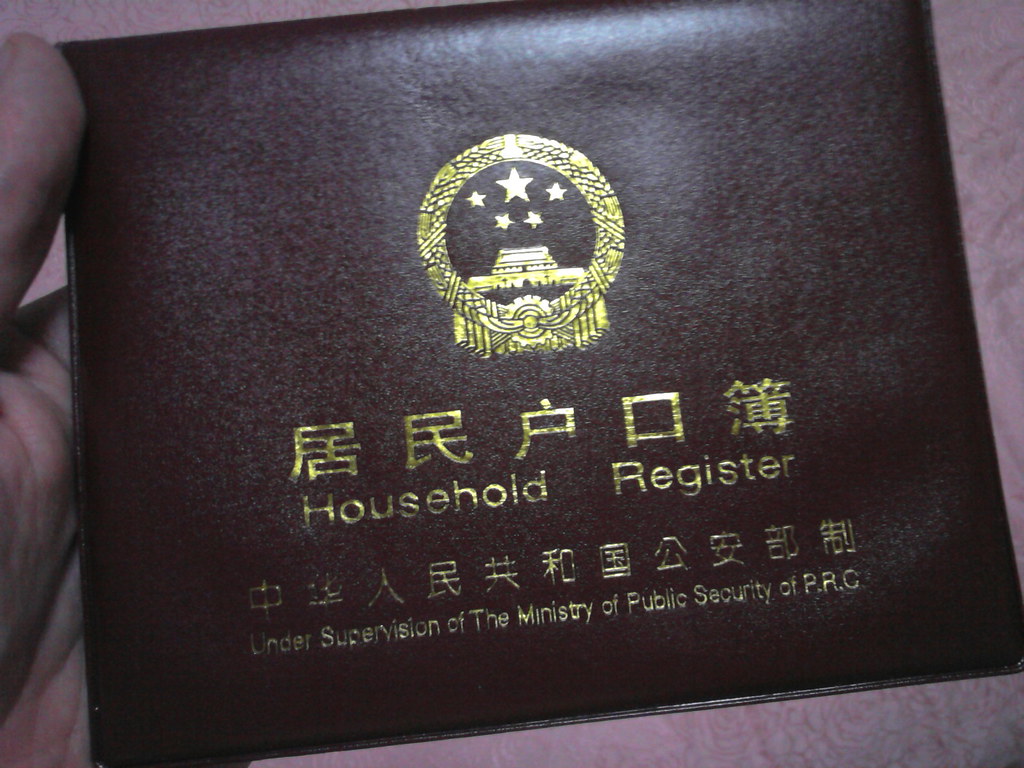
The hukou, or household register, works differently. It records a family unit, not one person. Pages show registration events, address changes and updates over time. Supplying only your own page removes the context that makes the register meaningful. Send every page, including the cover and any blank-looking update pages.
Our earlier guide on Chinese passports and citizenship documents covers travel and nationality records in more detail. This article focuses on the civil and notarial records that sit alongside them.
What a compliant translation includes
| Element | Compliant translation | Common gap |
|---|---|---|
| Main body text | Full translation of every field | Fields summarised or skipped |
| Seals and stamps | Each seal described and translated | Seals ignored as decoration |
| Names | Shown as written, with consistent romanisation | Order swapped without a note |
| Dates | Converted and explained where needed | Minguo year read as a Western year |
| Reverse side | Translated or noted as blank | Reverse side never supplied |
| Translator details | Name, practitioner number, date, language direction | Certification page missing |
Why this subject matters in Australia
Chinese languages form one of the largest language groups in the country. The 2021 Census recorded about 685,000 people speaking Mandarin at home and about 295,000 speaking Cantonese. More than 549,000 Australian residents were born in mainland China, with further communities born in Hong Kong, Taiwan and Macau. The Australian Bureau of Statistics cultural diversity data shows how large the need for accurate Chinese document translation has become.
Each of those communities produces birth certificates, marriage records, household registers, academic transcripts and court documents written in Chinese. Every one of those records needs the same careful treatment when it reaches an Australian organisation.
What Home Affairs expects in practice
The Department of Home Affairs asks applicants to provide the original document together with its English translation. For translations prepared in Australia, the translator should be NAATI certified, and the translation should show the translator's full name, contact details and credentials. The department's own guidance on translated documents sets out these expectations clearly.
Other organisations follow similar logic with their own variations. Universities assessing Chinese academic records, state registries handling name changes and courts receiving foreign evidence each publish their own instructions. Read the receiving organisation's current requirements before you order, because the organisation makes the final decision about what it accepts.
Five situations that cause delays
Real applications tend to stumble over the same small details.
- A hukou booklet arrives with only the applicant's page, and the family context is missing.
- A Taiwan document dated year 108 gets read as 2008 instead of 2019.
- An address written in a local dialect form does not match the pinyin version used elsewhere.
- A red seal is treated as a decorative stamp and left out of the translation.
- The same person's name appears as Zhang on one record and Chang on another, with no note connecting them.
Each problem is easy to prevent. Supply complete documents, mention every spelling variation you know about and let the translator see the whole record rather than selected pages.
Choosing the right translation service
The right scope depends on the document, not on a guess. A single civil certificate with fixed fields suits an extract translation. A multi-page household register or a notarial booklet with several certificates inside usually needs a full translation. When you are unsure, ask before ordering.
| Service | Price (AUD) | Standard turnaround | Best suited to |
|---|---|---|---|
| Self Service Extract Translation | $44.95 | From 1 hour | Simple certificates you can identify and label yourself |
| Extract Translation | $59.95 | From 1 business day | Standard civil certificates and single page records |
| Full Translation | $69.95 | From 2 to 3 business days | Multi-page records, hukou booklets and notarial files |
These are displayed prices, not quotes, and the turnarounds are standard timeframes rather than guarantees. A birth certificate translation is the most common starting point for Chinese family records, and the same principles apply to marriage, death and household documents.
Checklist before you submit
- Every page of the original document is scanned, including the reverse side.
- All seals, stamps and handwritten notes appear in the translation.
- Names match your passport spelling, with notes for any variation.
- Dates are converted correctly, including Minguo calendar years.
- The translator's name, practitioner number and certification details are visible.
- The original document and the translation are submitted together.
- You have checked the receiving organisation's current instructions.
Questions readers commonly ask
Do bilingual Chinese documents still need translation?
Sometimes. Hong Kong and Macau records often include English text, but the English section may not reproduce every Chinese entry. The receiving organisation decides whether the existing English is sufficient, so check with them first.
Is a notarial certificate the same as a certified translation?
No. A Chinese notarial certificate confirms a fact about you, such as your birth. A certified translation converts the document's language and identifies the translator. They serve different purposes, and one does not replace the other.
Can I translate my own Chinese documents?
Self-prepared translations rarely satisfy Australian organisations, because the translator's credentials cannot be verified. A NAATI certified translator provides the identifiable, accountable certification that government departments and other bodies look for.
What if my name is spelt differently across my documents?
Tell the translator before work begins. They can keep the translation consistent with your passport and add a note explaining the variation, which is far better than leaving the mismatch unexplained.
Key takeaways
Chinese documents ask more of a translation than most records. Names run in a different order, seals carry legal meaning, calendars differ by region and household registers only make sense as complete booklets. A translation that respects those features gives the receiving organisation everything it needs to read your record once, without coming back with questions.
Supply complete documents, flag every name variation and check the receiving organisation's instructions before you order. Passport Translations prepares Chinese to English translations that are suitable for Australian organisations, with displayed prices and standard turnaround times on every service page.